How Many Days Do You Need in Yellowstone?
The short answer is four days. That gives you time to see Old Faithful, Grand Prismatic Spring, the Grand Canyon of the Yellowstone, and at least one morning in Lamar Valley without white-knuckling every turn. But what "enough" means depends on what you came for.
Choose the trip that fits your gateway, available time and actual party needs.
Booking choice: Two days connect the geysers, Canyon, Mammoth and Lamar Valley with a guide and optics. Lodging, breakfast, dinner and park entry are extra. Arrange the overnight accommodation with the operator. Not recommended for poor cardiovascular health.
Explore Two-day Upper and Lower Loop tourWe may earn a commission when you book through these links.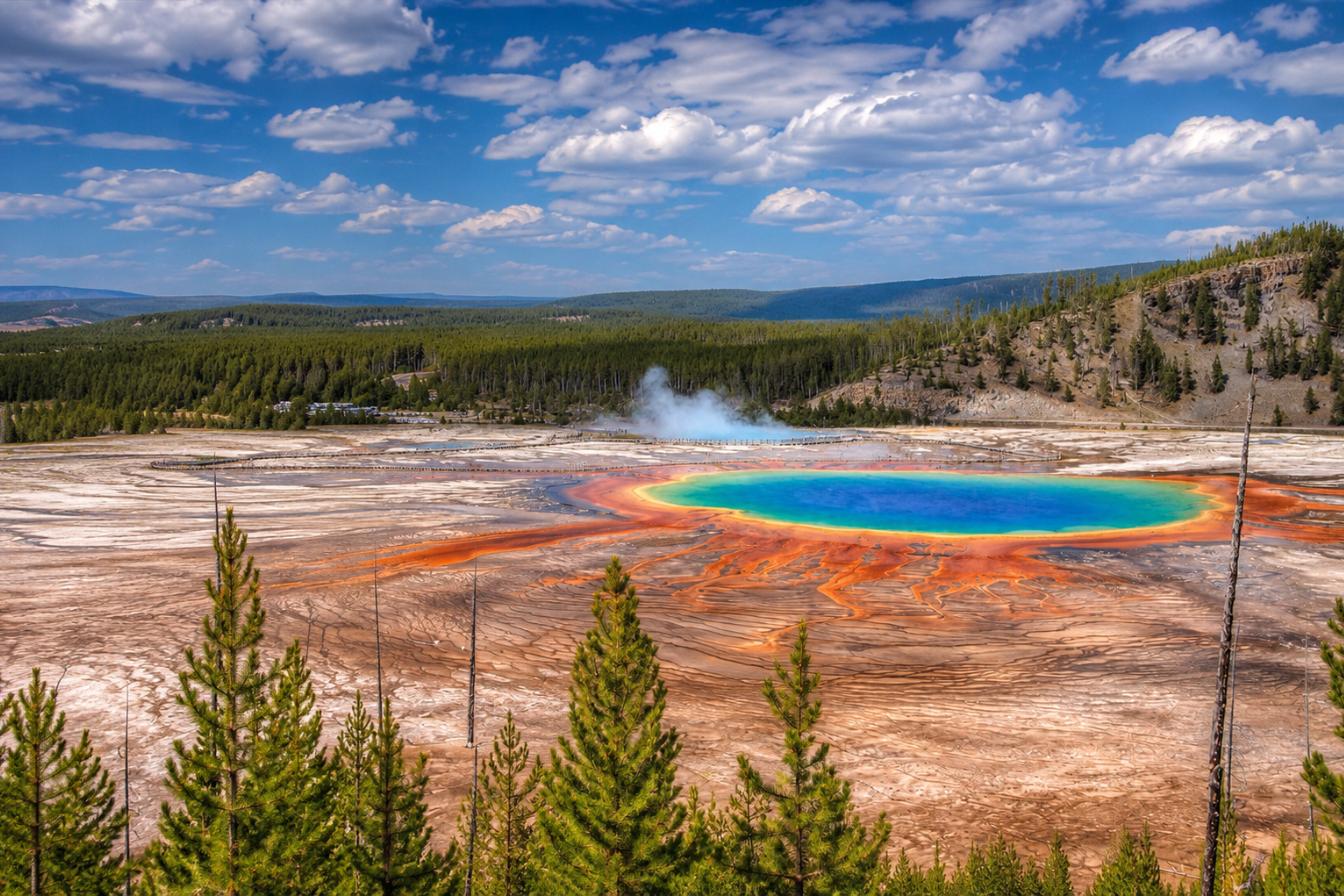
The Direct Answer: Four Days Covers the Core
Four full days in the park lets you drive both the Upper and Lower loops, watch Old Faithful erupt at least once, walk the Grand Prismatic overlook, stand at the rim of the Grand Canyon of the Yellowstone, and spend a dawn session scanning Lamar Valley for wolves and bison. That is enough to leave feeling like you genuinely saw the park rather than sprinted through it. Most organized guided tours of Yellowstone land in this four-to-five-day range for exactly this reason.
Fewer than three days and you are choosing between geysers and wildlife, not getting both. More than five and you start to have the luxury of repeat visits to the same spot at different times of day, which is when the park shifts from impressive to genuinely personal. The table below maps realistic expectations to each window.
What Each Time Window Actually Covers
Two days is a highlight reel. Four days is the park done properly. Six days is the version where you stop rushing.
| Days | What you can realistically cover | What you miss |
|---|---|---|
| 2 | Old Faithful, Grand Prismatic, one loop (Upper or Lower) | The other loop, Lamar Valley, most wildlife |
| 3 | Both loops driven quickly, the main thermal areas, one wildlife session | Time to linger, backcountry, Norris Geyser Basin |
| 4 | Both loops at a comfortable pace, 2 wildlife sessions, the Grand Canyon of the Yellowstone, Mammoth Hot Springs | Deep backcountry, extended wolf tracking, Bechler |
| 5-6 | Everything above plus repeat Lamar Valley mornings, a rafting segment, Norris at different times, Grand Teton extension | Very little of the front-country park |
Why Most Tours Run Four to Five Days
Tour operators have tested this over thousands of departures: four days is the minimum that covers both loops and the major wildlife corridors without cutting corners, and five days adds Grand Teton and breathing room. The 4-day Yellowstone and Grand Teton camping tour from Salt Lake City ($1,050, 4.9 rating, 429+ booked) packs both parks into four days at a camping pace. The 5-day hotel-based Yellowstone and Grand Teton tour ($2,995, 5.0 rating) adds a dedicated wolf-tracking morning in Lamar Valley that the four-day format does not have room for.
The extra day creates another wildlife observation opportunity. Wolves, bears and moose follow their own schedules; an additional morning can help, but sightings are not independent events and there is no defensible promise that a second morning doubles the odds. The hotel-based itinerary includes a wolf-tracking session.
What If You Only Have Two or Three Days?
Pick one loop and commit to it. The Lower Loop (Old Faithful, Grand Prismatic, Yellowstone Lake, West Thumb) is the better choice for a first visit because it concentrates the park's most famous thermal features into one drive. Add the upper loop vs. lower loop breakdown to decide which fits your priorities.
Three days opens up both loops if you drive early. Start with the Lower Loop on day one, the Upper Loop (Mammoth, Tower Fall, Lamar Valley) on day two, and use day three for a revisit or a Grand Teton side trip. This works, but it means long days in the car and not much time at any single stop. A Yellowstone itinerary guide walks through the daily logistics for each duration.
Should You Extend into Grand Teton?
If you have five or more days, yes. Grand Teton sits directly south of Yellowstone with no gap between the two parks, and the Teton Range is a completely different landscape: sharp alpine peaks rising straight out of a valley floor, no foothills, no buildup. The 6-day camping explorer ($2,159, 5.0 rating, 158+ booked) runs both parks in sequence and adds a whitewater rafting segment that neither park's thermal features would ever suggest.
Most combined Yellowstone and Grand Teton tour packages allocate roughly one day to the Tetons and three to four to Yellowstone. That split works because Grand Teton's highlights are more concentrated: Jenny Lake, the Moose-Wilson Road and the Snake River overlook can fill a full day, but they sit closer together than Yellowstone's spread-out basins and valleys.
Camping vs. Hotel: Does It Change How Many Days You Need?
Not really, but it changes what those days feel like. Camping puts you inside the park at first light, which matters for wildlife. Hotels (most are in gateway towns like West Yellowstone, Gardiner or Jackson) add 30 to 60 minutes of driving each morning and evening, which effectively shortens your in-park hours. The 4-day camping format from Salt Lake City keeps the group inside the park, while the 5-day hotel-based option runs from Bozeman to Jackson with lodging outside the gates each night.
If you want to compare Yellowstone tour packages side by side, the homepage lays out all six options with prices, ratings, durations and departure cities. The camping tours tend to run $1,050 to $2,159 per person, while hotel-based and luxury options range from $2,198 up to $6,012 for a 7-day format.