Is Yellowstone Good for Families with Kids?
Yellowstone is one of those rare places where a seven-year-old and a seventy-year-old can be equally stunned by the same thing. A geyser erupting on schedule, a bison standing in the middle of the road, boiling mud that smells like rotten eggs. Kids do not need convincing here. The park does the work.
Choose the trip that fits your gateway, available time and actual party needs.
Booking choice: A private vehicle and guide let your party adjust the pace of a Lower Loop day. Lunch and hotel pickup included; park fees and tips extra. Confirm child seats and any access needs before booking.
Explore Private Lower Loop from JacksonWe may earn a commission when you book through these links.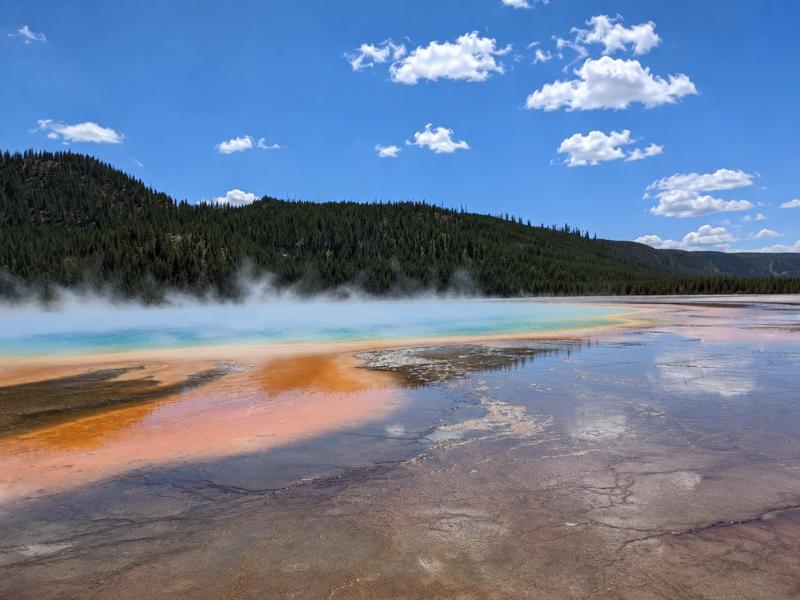
What age minimums apply to Yellowstone tours?
The featured multi-day wildlife trip accepts ages 6+, Bindlestiff’s camping and hotel trips accept ages 7+, and the G Adventures camping trip requires 12+. Private day options can accept younger children; confirm child seats, vehicle time and the actual itinerary before booking.
Here is how the age minimums break down across the available tours:
| Tour | Minimum age | Duration | Format | Why this age? |
|---|---|---|---|---|
| BrushBuck Wildlife Adventure | 6+ | 4 days | Hotel-based, vehicle wildlife viewing | Low physical demand, vehicle-based stops, naturalist guide |
| 4-Day Camping (Bindlestiff) | 7+ | 4 days | Camping, 2-5 mile hikes | Requires stamina for hikes and overnight camping |
| 5-Day Hotel-Based (Bindlestiff) | 7+ | 5 days | Hotel-based, guided hikes | Moderate hiking, longer itinerary |
| Discovery Classic (Insight Vacations) | Not specified | 7 days | Luxury coach, hotel | Geared toward adult pace, long coach days |
| 6-Day Camping Explorer (G Adventures) | 12+ | 6 days | Camping, whitewater rafting | Rafting and Mt Washburn hike require physical maturity |
Which tours are best for families?
The 4-day Bindlestiff camping tour is the strongest family pick for kids 7 and up. It costs $1,050 per person, runs small groups of 14 maximum, provides all camping gear (except sleeping bags), and fills four days with the exact things kids remember: campfire stargazing, geyser eruptions, canyon hikes and wildlife spotting.
The camping format works for families in ways hotel tours sometimes do not. Kids sleep in tents inside the park, cook meals together from an $80 per-person food kitty, and hike 2-5 miles through the Grand Canyon of the Yellowstone. Hikes are adjusted by the guide based on group ability, so a seven-year-old will not be dragged through a five-mile forced march.
For families who prefer hotels, the BrushBuck wildlife adventure ($2,198, ages 6+) focuses on wildlife viewing from vehicle pullouts and short walks in Lamar Valley, Hayden Valley and Oxbow Bend. A naturalist guide provides binoculars and spotting scopes, so kids do not need their own gear.
The 5-day hotel-based Bindlestiff tour ($2,995, ages 7+) adds a wolf-tracking expert and works for families with older kids (10+) who are genuinely interested in wildlife biology.
What makes Yellowstone exciting for kids specifically?
Geysers that erupt on a predictable schedule, mud pots that bubble and hiss, bison that weigh 2,000 pounds standing ten feet from the car, and the very real possibility of seeing a wolf, a grizzly bear or a bald eagle on any given morning. This is not a museum. The park is a living demonstration of geology and ecology, and kids respond to it viscerally.
A few of the specific experiences that land hardest with younger visitors:
- Old Faithful: erupts roughly every 90 minutes. You can time your arrival, sit on the benches, and watch a column of boiling water shoot 130 feet into the air. Kids under 10 are usually genuinely shocked. The predictability means you are not waiting around hoping something happens.
- Grand Prismatic Spring: the largest hot spring in the US, ringed with orange, yellow and green microbial mats. The steam rising off the surface makes the whole scene feel otherworldly.
- Bison and elk encounters: wildlife jams happen daily in summer. A 2,000-pound bull bison walking past your vehicle window at arm's length is not something a kid forgets.
- Campfire stargazing: the camping tours include evening time at the campsite inside the park, far from any light pollution. The Milky Way is visible to the naked eye on clear nights.
The Yellowstone family tour packages guide covers more options and logistics. For the wildlife angle specifically, the Yellowstone wildlife tours page explains which valleys produce the most reliable sightings by season.
Safety rules families need to know
Yellowstone has real hazards that are not fenced, roped or childproofed. Thermal features can be fatally hot. Wildlife is wild. Boardwalks exist because the ground next to them can be thin crust over boiling water. These are not theoretical risks posted on signs for liability reasons. People have died stepping off boardwalks and approaching bison.
The non-negotiable rules for families:
- Stay on boardwalks at all thermal features. The ground near geysers and hot springs can look solid but be thin crust over water at 200 degrees Fahrenheit. Children must be within arm's reach at all times on thermal boardwalks.
- Stay 100 yards from bears and wolves, 25 yards from bison and elk. These distances are NPS regulations, not suggestions. A bison can run 35 mph. An elk cow with a calf will charge. A grizzly with cubs will defend. Guided tours handle this automatically because the guide controls proximity.
- Carry bear spray in the backcountry. The park's bear population is healthy, which means encounters happen. Guided tours provide protocols and group safety. Self-driving families should buy bear spray at any gateway-town outfitter.
- Do not feed any wildlife. This includes ground squirrels and ravens. Fed animals lose fear of humans and become dangerous.
A guided tour removes most of this burden from parents. The guide enforces distances, knows which pullouts are safe, and manages group behavior around thermal features. That is one of the clearest arguments for booking a guided tour when traveling with children.
What about the Junior Ranger program?
Yellowstone's Junior Ranger program is free, available at any visitor center, and gives kids ages 5 to 12 an activity booklet tied to real features in the park. Complete the activities, show them to a ranger, get a badge. It is one of the NPS's best tools for turning a family visit into something educational without making it feel like school.
The booklet asks kids to observe specific features (geysers, wildlife, geological layers), answer questions about what they saw, and attend a ranger-led talk. Most children finish it over two to three days. The badge is a real pin, not a sticker, and kids take it seriously. On a guided tour, the Junior Ranger activities slot in naturally: Old Faithful, Grand Prismatic and Canyon Village visitor center are all standard stops that count toward the booklet.
What is the best age to bring kids to Yellowstone?
Ages 6 to 12 is the sweet spot. Old enough to hike a mile or two, young enough to be genuinely amazed by geysers and wildlife, and at the right age for the Junior Ranger program. Teenagers enjoy it too, especially the camping and rafting formats, but the wide-eyed wonder peaks in the single-digit years.
Children under six can visit on a self-drive trip or a suitable private tour. Confirm child seats and plan shorter stops, regular breaks and nap time. Shared tours and active multi-day itineraries have product-specific age minimums.
The Yellowstone itinerary guide helps families plan day-by-day routes that balance driving time and kid-friendly stops. For families weighing a guided tour against self-driving, the tour vs self-drive comparison covers the trade-offs.