Best Time to Visit Yellowstone (2026)
Yellowstone stretches across 3,500 square miles of volcanic plateau, and the experience you get depends almost entirely on which month you show up. Summer delivers all five entrances open and the widest tour selection, but winter turns the park into a frozen backcountry that fewer than 5% of annual visitors ever see. This guide maps every month against weather, road access, wildlife activity, and crowd pressure so you can pick the window that fits your trip.
Choose the trip that fits your gateway, available time and actual party needs.
Booking choice: Old Faithful, Grand Prismatic and Canyon with a guide, lunch and binoculars. Up to 13 hours with travel; moderate walking. Select Jackson/Teton pickup points. Confirm park fees for your residency.
Explore Jackson Lower Loop day tourWe may earn a commission when you book through these links.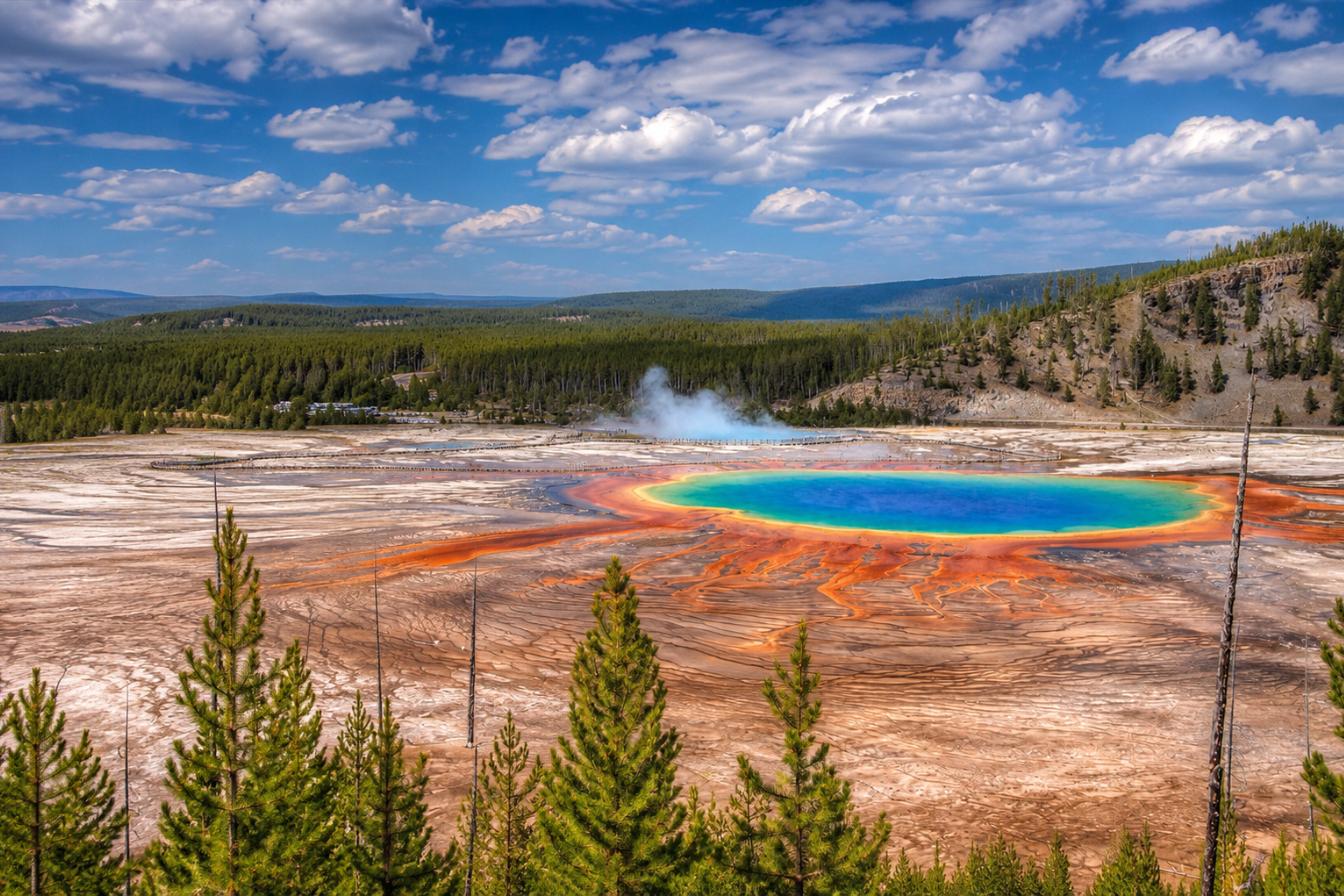
What is the absolute best month to visit Yellowstone?
September is the single best month for most visitors. Crowds drop by roughly 40% from the July peak, all roads and facilities remain open, daytime highs hover in the mid-50s to low 60s Fahrenheit, and bull elk are bugling across Mammoth Hot Springs and the Madison River corridor. You get full access to the park without fighting for parking at Old Faithful or Canyon Village.
June through August draws the heaviest traffic. The park logged around 4.8 million recreation visits in a recent year, and nearly half of those visits landed between June 15 and August 31. If you can shift your dates even two weeks past Labor Day, you will notice shorter lines at every major thermal feature and far easier campsite availability.
That said, the "best" month changes depending on what you want. Wildlife photographers chasing wolves and grizzlies prefer late April through May, when Lamar Valley is at its most active. Families with young kids often pick July for warm weather and predictable road conditions. Winter enthusiasts book Yellowstone snowcoach tours between December and February to see geysers erupting against snowbanks. The table below breaks down the tradeoffs month by month.
| Month | Avg High / Low (°F) | Crowds | Roads Open | Top Draw |
|---|---|---|---|---|
| January | 28 / 8 | Very low | North entrance only (by car) | Snowcoach/snowmobile access, frozen waterfalls |
| February | 32 / 9 | Very low | North entrance only (by car) | Bison herds along river corridors |
| March | 39 / 16 | Low | North entrance only (by car) | Late-season snowmobiling, quietest month |
| April | 47 / 24 | Low to moderate | North + some roads mid-month | Bear and wolf activity, snowmelt waterfalls |
| May | 56 / 30 | Moderate | Most roads open mid-May | Baby bison, wildflowers starting |
| June | 65 / 36 | High | All roads open | Longest daylight, full park access |
| July | 73 / 41 | Peak | All roads open | Warmest weather, all services running |
| August | 72 / 39 | Peak | All roads open | Clear skies, evening ranger programs |
| September | 61 / 31 | Moderate | All roads open | Elk rut, fall colors, thinner crowds |
| October | 48 / 23 | Low | Most roads; some close late Oct | Snow-dusted peaks, last window before closures |
| November | 34 / 14 | Very low | North entrance only (by car) | Transition month, limited access |
| December | 27 / 8 | Low | North entrance only (by car); winter season starts mid-Dec | Snowcoach season opens, holiday trips |
When do Yellowstone roads actually open and close?
Most park roads open between mid-April and late May in a staggered sequence, starting with the Mammoth to Old Faithful road and ending with Dunraven Pass (Tower to Canyon) and the East Entrance, which typically open last around late May. All interior roads close to wheeled vehicles by early November, and the park shifts to oversnow travel from mid-December through mid-March.
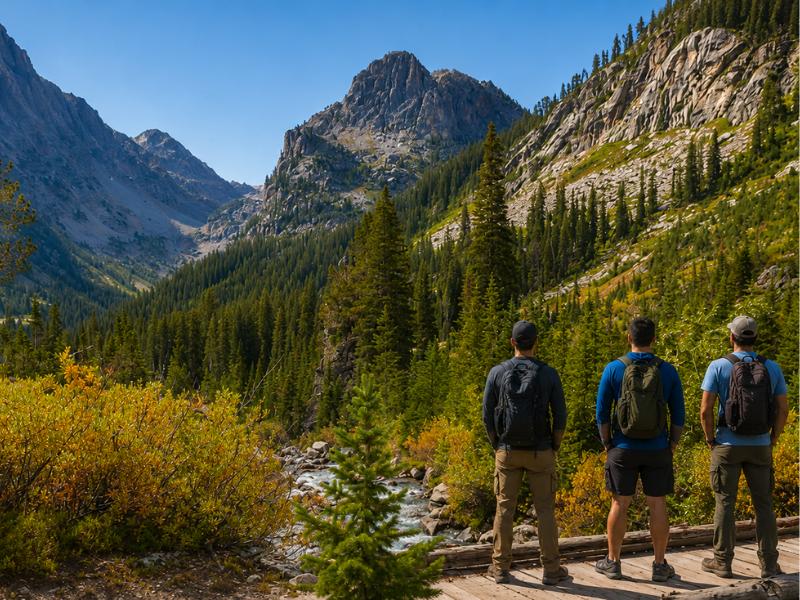
The exact dates shift every year based on snowpack and plowing progress. The NPS publishes a road status page that updates daily. As a rule of thumb, the West Entrance and most of the Lower Loop open by the third week of April. The Beartooth Highway (connecting to the Northeast Entrance from Red Lodge, Montana) does not open until late May or even early June.
This staggered schedule matters if you are booking a 4-day camping tour from Salt Lake City or a 5-day hotel-based tour. Multi-day guided tours that cover both Yellowstone and Grand Teton require the Rockefeller Parkway road between the two parks to be open, which happens by mid-May most years.
| Road Segment | Typical Open Date | Typical Close Date | Notes |
|---|---|---|---|
| Mammoth to Old Faithful (via Norris) | Mid-April | Early November | First road plowed each spring |
| West Entrance to Madison | Third week of April | Early November | Busiest entrance by volume |
| Old Faithful to West Thumb | Late April | Early November | Craig Pass, highest point on Grand Loop |
| Canyon to Lake (Hayden Valley) | Early May | Early November | Prime bison and grizzly corridor |
| Tower to Canyon (Dunraven Pass) | Late May | Mid-October | 8,859 ft, often last to open |
| East Entrance to Fishing Bridge | Late May | Early November | Access from Cody, Wyoming |
| Beartooth Highway (NE Entrance) | Late May to early June | Mid-October | Weather-dependent, can close temporarily |
| South Entrance (Grand Teton) | Mid-May | Early November | Connects to Jackson Hole |
Which season offers the best wildlife sightings?
Late April through early June is the prime wildlife window. Grizzlies and black bears are active at lower elevations after emerging from dens, wolf packs are raising pups in Lamar Valley, and bison calving season puts hundreds of orange-red newborns across the northern range. This period overlaps nicely with moderate crowds and still-manageable temperatures.
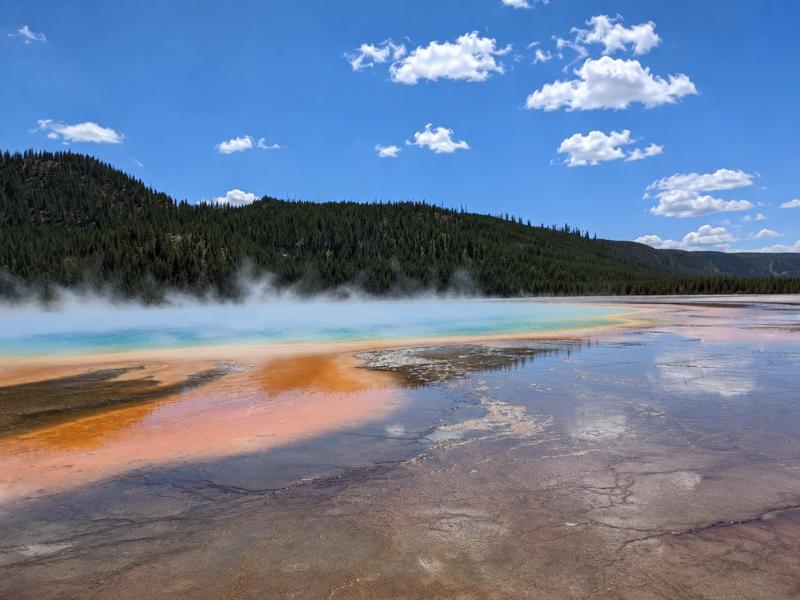
Yellowstone is home to the largest concentration of large mammals in the lower 48 states. The park supports roughly 5,000 bison, 600 to 800 grizzly bears in the Greater Yellowstone Ecosystem, and around 500 elk in the northern herd. Wolf packs, reintroduced in 1995, number about 100 animals across roughly 10 packs inside the park boundary.
If your primary goal is seeing wolves, the 4-day wildlife adventure with BrushBuck supplies binoculars, spotting scopes, and a naturalist guide who knows pack territories in Lamar and Hayden valleys. The 5-day hotel-based tour from Bindlestiff includes a wolf tracking expert for dedicated early-morning sessions. Both run during the high-probability months.
| Animal | Best Months | Best Locations | Sighting Probability |
|---|---|---|---|
| Bison | Year-round | Lamar Valley, Hayden Valley, Madison River | Near certain |
| Grizzly bear | April to June, Sept to Oct | Hayden Valley, Fishing Bridge, Dunraven Pass | Moderate to high |
| Black bear | May to September | Tower-Roosevelt, Mammoth area | Moderate |
| Gray wolf | Year-round (best Nov to April) | Lamar Valley, Slough Creek | Moderate (higher with guide/scope) |
| Elk | Sept to Oct (rut), May to June | Mammoth Hot Springs, Madison River | High |
| Moose | May to September | Willow Flats (Grand Teton), Soda Butte Creek | Low to moderate |
| Pronghorn | May to October | Lamar Valley, Blacktail Plateau | Moderate |
| Bighorn sheep | June to September | Mount Washburn, Gardner Canyon | Low to moderate |
Winter wildlife watching deserves its own mention. Yellowstone winter tours run through the park's quietest months, when bison cluster along thermal-warmed rivers and wolves are easier to spot against fresh snow. The tradeoff is that only the road from Gardiner to Cooke City stays open to regular vehicles.
How bad are Yellowstone's summer crowds, and can you avoid them?
Summer crowds at Yellowstone are genuinely intense. On peak July days, the park can see over 25,000 vehicle entries, parking lots at Old Faithful and Grand Prismatic fill by 10 a.m., and you may wait 30 minutes or longer for a spot at popular pullouts in Hayden Valley. The best crowd-avoidance strategy is visiting before 9 a.m. or after 5 p.m., or shifting your trip to September.
The West Entrance handles the highest volume of any entrance, followed by the South Entrance from Grand Teton. If you are driving yourself, entering through the Northeast Entrance (Lamar Valley side) or the East Entrance (from Cody) will cut your wait at the gate substantially.
Guided tours solve a major part of the crowd problem. Operators like BrushBuck and Bindlestiff build their itineraries around early-morning departures when parking is easy and wildlife is most active. A guided Yellowstone tour also means you skip the navigation stress and the "should we wait for this parking spot" debates. Operators have studied the park's traffic patterns for years and route around the worst bottlenecks.
The table below shows relative crowd levels by month, rated on a 1 to 10 scale based on entrance station data.
| Month | Crowd Level (1-10) | Avg Wait at West Entrance | Parking Stress | Strategy |
|---|---|---|---|---|
| January | 1 | None (oversnow only) | None | Snowcoach or snowmobile required |
| April | 2 | Under 5 min | None | Some roads still closed |
| May | 4 | 5 to 15 min | Low | Great balance of access and quiet |
| June | 7 | 15 to 30 min | Moderate | Arrive before 9 a.m. |
| July | 10 | 30 to 60+ min | Severe | Enter via NE or East Entrance |
| August | 9 | 20 to 45 min | High | Post-Labor Day week much better |
| September | 5 | 5 to 15 min | Low | Best all-around month |
| October | 3 | Under 5 min | None | Check road closures before going |
What should you pack for each season in Yellowstone?
Yellowstone sits at elevations between 5,300 and 11,000 feet, which means temperatures can swing 30 to 40 degrees in a single day regardless of season. Layering is non-negotiable. Summer visitors still need a warm fleece and rain shell because afternoon thunderstorms are common, and mornings at geyser basins start in the 30s. Winter visitors need full cold-weather gear rated to below zero.
If you are joining a guided camping tour like the 4-day Yellowstone and Grand Tetons camping trip (around $1,050, check the live listing), note that camping equipment is provided except for a sleeping bag. You will want a bag rated to at least 20°F for summer and 0°F for shoulder-season trips. The operator also collects an $80 food kitty for group meals.
| Item | Summer (June-Aug) | Shoulder (May, Sept-Oct) | Winter (Nov-Mar) |
|---|---|---|---|
| Base layer | Moisture-wicking tee | Merino wool top | Heavyweight merino set |
| Insulation | Light fleece | Mid-weight fleece or down vest | Insulated down jacket |
| Shell | Packable rain jacket | Waterproof rain jacket | Hardshell parka (windproof) |
| Bottoms | Hiking pants + shorts | Hiking pants + leggings | Insulated snow pants |
| Footwear | Trail shoes or light hikers | Waterproof hiking boots | Insulated winter boots (Pac-style) |
| Head / hands | Sun hat, light gloves for mornings | Warm beanie, mid-weight gloves | Balaclava, insulated gloves, goggles |
| Extras | Sunscreen SPF 50, bug spray | Bear spray, trekking poles | Hand warmers, neck gaiter |
Bear spray is strongly recommended in every season except deep winter when bears are denning. It is available for purchase at park visitor centers and gateway-town outdoor shops. Canisters cannot be carried on commercial flights, so buy or rent one locally if you are flying in.
How much does a Yellowstone trip cost by season?
Budget note: Price figures in the editorial comparisons are planning examples, not current quotes. Compare the same dates, travelers and inclusions. Park fees depend on pass coverage and residency; confirm any nonresident surcharge before booking.
A mid-range Yellowstone trip costs between $150 and $350 per person per day depending on the season and whether you camp or stay in hotels. Summer hotel rooms in park lodges run $250 to $400 per night when you can get them (they sell out months ahead), while camping inside the park costs $20 to $35 per night for a site. Winter trips are typically less expensive on lodging but require specialized transport like snowcoaches or snowmobile rentals.
Guided multi-day tours bundle lodging, transport, and expert guiding into a single price, which often compares favorably to piecing everything together on your own. A 4-day camping tour with Bindlestiff runs around $1,050 per person. The 5-day hotel-based option from the same operator is around $2,995, which includes four breakfasts and a $100 food kitty. The BrushBuck wildlife adventure (4 days, from Jackson Hole) is around $2,198 with binoculars and spotting scopes provided.
For visitors who want a premium experience, Insight Vacations' 7-day Discovery tour runs around $6,012 per person on a 40-seat luxury coach with porterage and hotel stays throughout. At the other end, G Adventures' 6-day camping and rafting adventure comes in at around $2,159 with whitewater rafting on the Snake River included.
| Tour | Days | Style | From City | Price (approx.) | Rating |
|---|---|---|---|---|---|
| Bindlestiff Camping Tour | 4 | Camping | Salt Lake City | $1,050 | 4.9 |
| BrushBuck Wildlife Adventure | 4 | Hotel / wildlife focus | Jackson Hole | $2,198 | 4.8 |
| G Adventures Camping Explorer | 6 | Camping + rafting | Jackson | $2,159 | 5.0 |
| Bindlestiff Hotel-Based | 5 | Hotel | Bozeman | $2,995 | 5.0 |
| 7-Day 4-State Tour | 7 | Hotel / multi-park | Salt Lake City | $3,545 | 4.8 |
| Insight Vacations Discovery | 7 | Luxury coach | Bozeman | $6,012 | 5.0 |
Park entrance fees are separate from tour costs. The Yellowstone-specific vehicle pass is $35 and valid for 7 days. The America the Beautiful annual pass ($80) covers all national parks and is a better deal if you plan to visit Grand Teton or any other NPS unit during the same year.
What are the best gateway towns and how do they affect your timing?
Yellowstone has five entrance gates, each served by a different gateway town: West Yellowstone (west), Gardiner (north), Cooke City/Silver Gate (northeast), Cody (east), and Jackson (south, via Grand Teton). Your choice of gateway determines which part of the park you see first and, in shoulder season, whether you can even get in, since only the north entrance at Gardiner stays open to cars year-round.
West Yellowstone is the most popular gateway, with the widest selection of hotels, restaurants, and outfitters. It is also the base for most Yellowstone snowmobile tours during winter. Jackson, Wyoming sits about 60 miles south of the park's South Entrance and doubles as the gateway to Grand Teton, making it ideal for tours that cover both parks. The BrushBuck wildlife tour departs from Jackson Hole, while the 5-day hotel-based Bindlestiff trip starts in Bozeman (about 90 miles from the north entrance) and ends in Jackson.
Cody, Wyoming is the least crowded approach and feeds into the scenic Wapiti Valley along the North Fork of the Shoshone River. The East Entrance typically opens in late May. If you are browsing Yellowstone tour packages, note that departure city matters: Salt Lake City is 320 miles from the West Entrance, while Bozeman is only 90 miles from Gardiner.
Is Yellowstone worth visiting in the off-season?
Absolutely. The off-season (roughly November through April, excluding the mid-December to mid-March winter season) is when Yellowstone shows a completely different character. Geysers are more dramatic against cold air, bison herds mass along thermally warmed streams, and you can stand at Old Faithful with a handful of other visitors instead of a thousand. The tradeoff is limited access: only the Mammoth to Cooke City road stays open to regular vehicles, and the interior requires snowcoach or snowmobile travel.
The shoulder months of May and October deserve special attention. Early May is when roads begin opening in sequence, and the park feels almost private. You may encounter snow at higher elevations, but the Grand Loop's lower sections are usually clear. October brings the first dustings of snow on mountaintops, gold-colored aspens in the Lamar Valley, and elk bugling echoing off canyon walls. Most services start shutting down in October, so plan to be self-sufficient on food and fuel.
Winter (mid-December through mid-March) is a separate world. Snowcoach tours carry visitors into the park interior on heated, tracked vehicles, stopping at Old Faithful and the geyser basins where steam clouds tower hundreds of feet in the frigid air. Snowmobile tours offer a more independent experience on groomed trails. Both require advance booking because daily entry permits into the park are limited during oversnow season.
If you have flexibility, the two best off-peak windows are the last two weeks of September (fall colors, elk rut, warm-enough weather, full road access) and the first two weeks of June (all roads freshly open, wildflowers starting, baby animals everywhere, crowds still building).
How many days do you actually need in Yellowstone?
Three days is the minimum to see the park's highlights without sprinting. In three days you can cover the Grand Loop (Old Faithful, Grand Prismatic, Yellowstone Lake, Canyon, Mammoth, Lamar Valley) and fit in one or two short hikes. Five days is the sweet spot for a thorough visit: enough time to explore both the Lower and Upper loops, add a day in Grand Teton, and build in buffer for weather delays or spontaneous wildlife-watching sessions.
The table below shows what you can realistically cover in different trip lengths. Note that Yellowstone is large: the Grand Loop road alone is 142 miles, and with speed limits of 45 mph (plus constant stops for bison and scenery), driving the full loop takes a solid 5 to 6 hours without stops.
| Trip Length | What You Can Cover | Best Tour Match | Pace |
|---|---|---|---|
| 1 to 2 days | One loop (Upper or Lower) | Self-drive day trip from gateway town | Rushed |
| 3 days | Full Grand Loop, 1 to 2 hikes | 4-day camping tour (travel days included) | Active |
| 4 to 5 days | Both loops + Grand Teton day + 3 to 4 hikes | 5-day hotel-based tour or BrushBuck wildlife trip | Comfortable |
| 6 to 7 days | Deep exploration + side trips (Beartooth Hwy, Cody) | 7-day Insight Vacations Discovery or 4-state tour | Relaxed |
| 8+ days | Backcountry permits, multi-day hikes, fishing | Self-planned with guided segments | Immersive |
Guided tours handle the logistics of fitting the right sights into your available days. The 7-day tour covering four states (around $3,545, check the live listing) loops through Yellowstone, Grand Teton, Devils Tower, Mount Rushmore, and Crazy Horse Memorial. With an 8-person maximum, it keeps the group small while covering an enormous amount of ground.