Yellowstone Snowcoach Tours
Snowcoaches are the most comfortable way to reach Yellowstone's interior in winter. These heated, enclosed vehicles carry 10 to 20 passengers across groomed snow roads, stopping at geyser basins, wildlife pullouts, and frozen waterfalls that are inaccessible by car from November through April. Unlike snowmobiles, snowcoaches require no driving skill, no cold-weather riding gear, and no minimum age. They are the family-friendly, photography-friendly way to see winter Yellowstone. This guide covers routes, pricing, what to expect on board, and how to choose between operators.
Choose the trip that fits your gateway, available time and actual party needs.
Booking choice: Combine an Old Faithful snowcoach day, Grand Teton wildlife and an elk-refuge sleigh ride, with three hotel nights. A four-day package, not a standalone snowcoach ticket. Three breakfasts and optics included; other meals and nonresident entry fees may be extra. Confirm age and vehicle-access arrangements.
Explore Four-day Jackson winter snowcoach tripWe may earn a commission when you book through these links.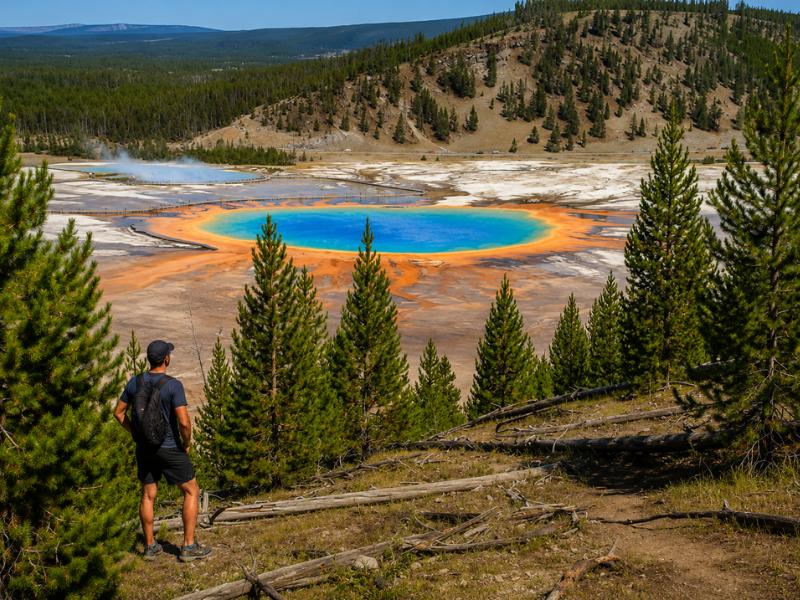
What exactly is a Yellowstone snowcoach?
A snowcoach is a specialized, enclosed vehicle designed to travel on groomed snow roads. Modern Yellowstone snowcoaches come in two types: converted passenger vans mounted on tracks (similar to a small tank), and large-wheeled vehicles with oversized, low-pressure tires that float on packed snow. Both carry 10 to 20 passengers in a heated cabin with large windows. A driver-guide narrates the trip, identifies wildlife, and stops at thermal features and viewpoints along the route.
The snowcoach concept dates back to the 1950s in Yellowstone, when the park began allowing winter access via tracked vehicles called Bombardiers. Today's machines are far more comfortable: padded seats, heating systems, PA for the guide's narration, and enough window space for photography without needing to step outside. Some newer models have roof hatches or pop-up viewing areas for photography stops.
Snowcoaches are licensed and permitted by the NPS, and only authorized commercial operators can run them inside the park. The number of daily snowcoach transportation events is capped by the NPS winter-use plan, which keeps the total number of oversnow vehicles in the park at a level that protects wildlife and air quality.
Which routes do Yellowstone snowcoach tours follow?
The three primary snowcoach routes all originate from West Yellowstone (West Entrance): the Old Faithful route (most popular, approximately 60 miles round trip), the Canyon route (longer at roughly 100 miles round trip, reaching the Grand Canyon of the Yellowstone), and the West Thumb/Yellowstone Lake route (about 90 miles round trip, visiting lakeside geyser basins). A fourth route runs from Mammoth Hot Springs south to Norris Geyser Basin and is accessible from the North Entrance at Gardiner.
The Old Faithful route is the standard first-timer's trip. Departing West Yellowstone around 8 a.m., the snowcoach follows the Madison River east through a valley where bison herds routinely graze alongside the road. You pass through Madison Junction, turn south along the Firehole River, and arrive at Old Faithful around mid-morning. The stop at Old Faithful typically lasts 1.5 to 2 hours, long enough to watch an eruption, walk the Upper Geyser Basin boardwalk, eat lunch at Old Faithful Snow Lodge, and visit the gift shop. The return trip follows the same route, arriving back in West Yellowstone by mid- to late afternoon.
| Route | From | Round Trip Distance | Duration | Key Stops | Best For |
|---|---|---|---|---|---|
| Old Faithful | West Yellowstone | ~60 miles | 8 to 9 hours | Madison River, Firehole River, Upper Geyser Basin | First-timers, families, geyser viewing |
| Canyon | West Yellowstone | ~100 miles | 9 to 10 hours | Norris Geyser Basin, Grand Canyon of Yellowstone, Lower Falls | Photography, longer adventure |
| West Thumb / Lake | West Yellowstone | ~90 miles | 9 to 10 hours | Old Faithful, West Thumb Geyser Basin, Yellowstone Lake | Lake views, quieter experience |
| Mammoth to Norris | Gardiner / Mammoth | ~42 miles | 5 to 7 hours | Mammoth Terraces, Obsidian Cliff, Norris Geyser Basin | Shorter trip, no oversnow staging needed |
The Canyon route is worth the longer day for repeat visitors or photographers. The Grand Canyon of the Yellowstone is dramatic in any season, but in winter the frozen spray at the base of the Lower Falls builds into massive ice cones, and the canyon walls are striped with ice columns. Norris Geyser Basin, a stop on the way to Canyon, is the hottest and most dynamic thermal area in the park, with geysers and fumaroles that change character from year to year.
How much do snowcoach tours cost?
Budget note: Price figures in the editorial comparisons are planning examples, not current quotes. Compare the same dates, travelers and inclusions. Park fees depend on pass coverage and residency; confirm any nonresident surcharge before booking.
A full-day Yellowstone snowcoach tour costs between $250 and $375 per adult, depending on the operator, route, and date. The Old Faithful route is typically at the lower end of that range, while Canyon and West Thumb routes command slightly higher prices due to longer distances. Children (usually ages 3 to 11) ride at reduced rates, typically $150 to $225. Multi-day packages that include lodging in West Yellowstone run $500 to $1,000 per person for two to three days.
Prices generally include the snowcoach seat, the guide's narration, and the park entrance permit (which the operator bundles in). Lunch is typically NOT included; most tours stop at Old Faithful Snow Lodge where you can buy a meal, or you can bring your own snacks and sandwiches. Some operators offer a premium upgrade that includes a box lunch.
| Tour Type | Adult Price | Child Price (3-11) | Duration | Includes Lunch? |
|---|---|---|---|---|
| Old Faithful day trip | $250 to $325 | $150 to $200 | 8 to 9 hours | No (buy at Snow Lodge) |
| Canyon day trip | $275 to $350 | $175 to $225 | 9 to 10 hours | No (bring your own) |
| West Thumb / Lake day trip | $275 to $375 | $175 to $225 | 9 to 10 hours | No |
| Mammoth to Norris (half-day) | $175 to $250 | $100 to $150 | 5 to 7 hours | No |
| 2-day package (lodging incl.) | $500 to $750 | $350 to $500 | 2 days | Varies |
| 3-day package (lodging incl.) | $750 to $1,000 | $500 to $700 | 3 days | Varies |
Compared to snowmobile tours, snowcoach tours are more affordable per person, especially for families. A family of four riding a snowcoach to Old Faithful pays roughly $700 to $900 total. The same family on snowmobiles (two machines) would pay $600 to $1,000 for the machines alone, plus the adults need valid driver's licenses.
What is it like riding a snowcoach in Yellowstone?
Riding a snowcoach feels like a cross between a safari vehicle and a heated tour bus. The cabin stays warm (60 to 70°F inside even when it is 0°F outside), seats are padded, and the oversized windows give every passenger a good view. The ride is bumpy on tracked models (think riding a boat on choppy water) and smoother on wheeled models with large tires. Speed averages 20 to 30 mph, and stops happen every 20 to 40 minutes for wildlife, thermal features, or photography.
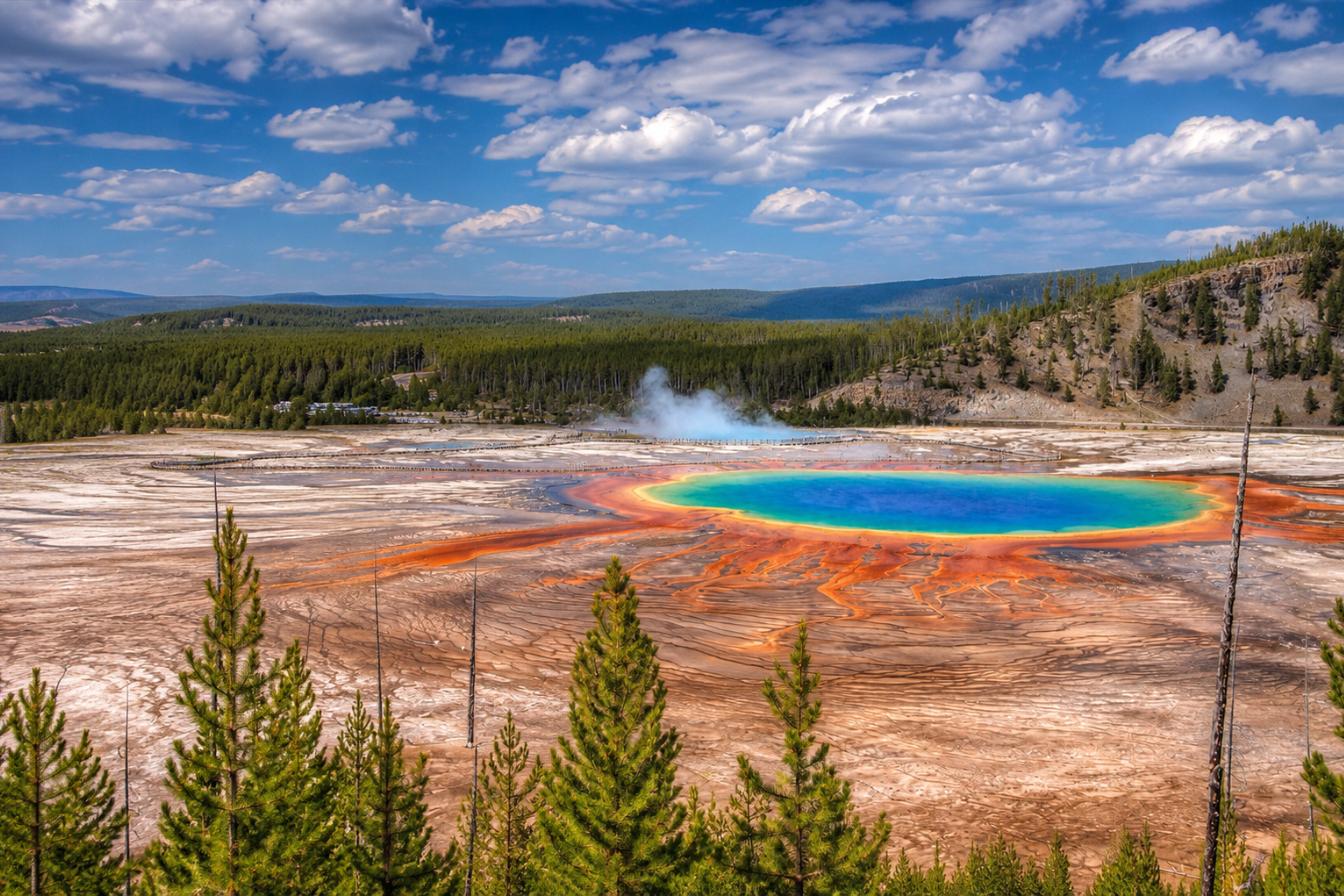
The guide narrates throughout, pointing out wildlife, explaining geothermal activity, and sharing the park's natural and human history. Good guides are the difference between a scenic bus ride and a genuinely educational experience. They will spot bison herds on distant hillsides, identify individual wolf pack members by coat pattern, and explain why Grand Prismatic Spring's colors shift from season to season.
At each stop, you exit the snowcoach and walk short distances (typically 100 yards to half a mile) on boardwalks or packed snow trails. This is where your cold-weather gear matters: even though the coach is warm, you will spend 15 to 30 minutes outside at each stop. Geyser basin boardwalks can be icy, so wear boots with good traction. Most tours make 5 to 8 stops in a full day.
Photography from inside the snowcoach is possible but limited by window glare and vibration. The best shots come during the stops, so bring a camera you can handle with gloves on (many wildlife photographers use a camera with a battery grip and oversized shutter button). A 70-200mm or 100-400mm lens is ideal for wildlife; a wide-angle lens captures the geyser basins and landscapes.
How do snowcoach tours compare to snowmobile tours?
Snowcoaches offer enclosed transport; snowmobiles involve riding in the cold. Check the actual route, age rules, boarding requirements and walking conditions for either format. A snowcoach can be a useful alternative for someone who does not want to drive a snowmobile, but is not automatically accessible to every traveler.
| Factor | Snowcoach | Snowmobile |
|---|---|---|
| Comfort | Heated cabin, padded seats | Open-air, cold exposure |
| Driver skill required | None (passenger only) | Valid driver's license, 16+ to drive solo |
| Group size | 10 to 20 per vehicle | 6 to 12 per guide |
| Narration / guide quality | Continuous in-cabin narration | Guide communicates at stops only |
| Photography ease | Hands free, but window glare | Stops only, hands needed for controls |
| Noise | Quiet | Moderate (BAT-compliant) |
| Physical demand | Low (walking at stops) | Moderate to high (riding, cold) |
| Price (per person, full day) | $250 to $375 | $275 to $450 solo |
| Minimum age | No minimum (infants welcome) | 16 to drive, younger as passenger |
| Gear provided | Not needed (heated cabin) | Snowsuit, boots, helmet, gloves |
A common strategy is to do one day on a snowcoach and one day on a snowmobile if your schedule and budget allow. The snowcoach day gives you the naturalist's knowledge and the comfort to focus on learning. The snowmobile day gives you the visceral, open-air winter experience. Together, they provide the fullest picture of winter Yellowstone.
For travelers planning a broader Yellowstone winter trip, combining a snowcoach tour with a self-drive day in Lamar Valley (accessible by car year-round via Gardiner) rounds out the winter wildlife experience without requiring every day to be a guided oversnow trip.
How far in advance should you book a snowcoach tour?
Book at least two to three months in advance for peak dates (Christmas through New Year's, Martin Luther King Jr. weekend, Presidents' Day weekend). For midweek departures in January or February, one to two months of lead time is usually sufficient. Operators begin taking winter bookings in late summer or early fall, so the earlier you commit, the better your choice of dates and routes.
The NPS caps the daily number of oversnow transportation events at each entrance, which means operators have a finite number of permits per day. When a date sells out with one operator, you may find availability with another, but popular dates across all operators can fill by early December for the coming winter season.
If your dates are flexible, target Tuesday through Thursday departures in mid-January or early February. These are the least popular winter dates and have the highest availability. They also tend to offer the coldest, most dramatic thermal-feature displays, since colder air makes geyser steam columns taller and more photogenic.
| Date Window | Demand Level | Recommended Lead Time | Availability Notes |
|---|---|---|---|
| Dec 20 to Jan 2 (holidays) | Highest | 3 to 4 months | Sells out first, premium pricing common |
| MLK weekend (mid-Jan) | High | 2 to 3 months | Popular long weekend |
| Presidents' Day weekend (Feb) | High | 2 to 3 months | Popular long weekend |
| January weekdays | Low to moderate | 1 to 2 months | Easiest to book, coldest conditions |
| February weekdays | Low to moderate | 1 to 2 months | Slightly warmer, longer daylight |
| March (final weeks) | Moderate | 2 months | Last chance before season ends |
What should you wear and bring on a snowcoach tour?
Even though the snowcoach cabin is heated, you will spend 15 to 30 minutes outside at every stop, walking boardwalks in temperatures that range from minus 10°F to 20°F. Dress in warm, layerable clothing: a base layer of merino wool or synthetic, a mid-layer fleece or light puffy jacket, and a windproof outer shell. Insulated winter boots with aggressive tread are essential because boardwalks at geyser basins are coated in ice. Bring warm gloves, a hat, and a neck gaiter or balaclava.
Unlike snowmobile tours, snowcoach operators do not provide outer gear. What you wear is what you have. Over-dressing for the coach ride is better than being cold at the stops, because you can always unzip your jacket inside the vehicle. Under-dressing means miserable stops and rushed photography.
Bring a small daypack with snacks, water (insulated bottle to prevent freezing), a camera, extra batteries (cold drains them fast), and hand and toe warmers. If you wear glasses, bring an anti-fog wipe or spray because the temperature difference between the heated coach and the outside air will fog lenses instantly when you step out.
For travelers coming to Yellowstone for a broader winter trip that includes both snowcoach and snowmobile days, the snowmobile operator provides outer gear on their tour day. Your own cold-weather layers serve double duty for the snowcoach day, when you are responsible for your own warmth.
Are snowcoach tours good for families with kids?
Snowcoach tours are the best winter option for families. There is no minimum age, the heated cabin keeps children warm and comfortable between stops, and the guide's narration turns the trip into an educational experience. Young children can nap during transit segments and wake up for the exciting stops at geysers and wildlife pullouts. Strollers do not work on snow, so bring a carrier for very young children at the walking stops.
Children are generally fascinated by the geysers, the bison along the road, and the novelty of riding a vehicle on snow. The stop at Old Faithful is long enough for kids to run off energy (safely, on cleared paths near the lodge), and the Snow Lodge has a warm dining room for a lunch break. Hot chocolate is available at the lodge and is usually the highlight for younger travelers.
Pricing for children (typically ages 3 to 11) runs about 60 to 65% of the adult rate. Children under 3 may ride free on a parent's lap, depending on the operator. Call ahead to confirm car seat policies if you are bringing a child under 4.
For summer family trips to Yellowstone, the BrushBuck 4-day wildlife adventure accepts ages 6 and up, and the Bindlestiff 4-day camping tour accepts ages 7 and up. Both are solid family options during the warmer months, with naturalist guides who know how to engage younger participants. If you are weighing summer versus winter for a family trip, our best time to visit Yellowstone guide maps each month against family-friendliness.
Which snowcoach operator should you choose?
The three most established Yellowstone snowcoach operators are Yellowstone Vacations (the largest, based in West Yellowstone), See Yellowstone (running both tracked and wheeled coaches), and the NPS-authorized concessioner Yellowstone Forever (which operates from Old Faithful Snow Lodge). The differences come down to vehicle type, group size, guide quality, and whether the operator bundles lodging. For most visitors, the choice is driven by which dates are available and whether you prefer a tracked or wheeled vehicle.
Tracked snowcoaches ride on caterpillar-style treads and have a more rugged, bumpy ride. They are the traditional Yellowstone winter vehicle and some travelers prefer them for the retro character. Wheeled coaches with oversized tires are smoother, quieter, and feel more like a standard tour vehicle. Both types are equally safe and cover the same routes at the same speed.
Guide quality varies by operator and individual guide, not just by company. Read recent reviews on TourRadar, TripAdvisor, or Google before booking, and look for mentions of specific guide names if you want to request a particular person. A knowledgeable, engaging guide transforms the trip, while a disengaged one turns it into a long bus ride through beautiful scenery.
| Operator Type | Vehicle Style | Group Size | Narration | Lodging Bundles | Booking Platform |
|---|---|---|---|---|---|
| Large outfitter (e.g. Yellowstone Vacations) | Both tracked and wheeled | 12 to 20 | In-cabin, continuous | Yes (hotel + tour packages) | Direct website |
| Mid-size outfitter (e.g. See Yellowstone) | Tracked and wheeled | 10 to 15 | In-cabin, continuous | Some operators | Direct website, TripAdvisor |
| NPS concessioner (Yellowstone Forever) | Both types | 10 to 20 | In-cabin, naturalist focus | Pairs with Snow Lodge stays | NPS/concessioner site |
| Small/boutique outfitter | Usually wheeled | 6 to 10 | Personalized, flexible stops | Sometimes | Direct, phone booking common |
What thermal features are most impressive by snowcoach in winter?
Every thermal feature in Yellowstone looks more dramatic in winter because the cold air amplifies the steam output. Old Faithful's eruption column rises 150 to 180 feet and billows outward in subzero temperatures, creating a steam cloud visible from miles away. Grand Prismatic Spring's colors are muted by a thick veil of steam, but Norris Geyser Basin's fumaroles, mudpots, and spouting geysers are at their most otherworldly when framed by snow and ice. The frozen Lower Falls at the Grand Canyon of the Yellowstone is a winter-only spectacle.
At Old Faithful and the Upper Geyser Basin, the boardwalk stops on a snowcoach tour let you see geysers erupting in conditions that fewer than 5% of Yellowstone's visitors ever witness. Castle Geyser, Grand Geyser, and Riverside Geyser all erupt year-round, and their tall columns of hot water and steam stand out sharply against the white landscape. The steam drifts through surrounding trees, coating branches in thick frost crystals called rime ice.
Norris Geyser Basin, a stop on the Canyon snowcoach route, is the park's hottest and most changeable thermal area. Steamboat Geyser, the world's tallest active geyser, can erupt to heights of 300 feet during major eruptions (these are rare and unpredictable). Even its minor eruptions and constant steaming are impressive in winter. Porcelain Basin within Norris is a stark, alien landscape of pale silica deposits, boiling pools, and roaring fumaroles that produces some of the most surreal photography opportunities in the park.
| Thermal Feature | Accessible by Which Route | Winter vs. Summer | Photography Tip |
|---|---|---|---|
| Old Faithful | Old Faithful route | Taller steam column, fewer spectators | Shoot from west side for backlit steam in morning |
| Grand Prismatic Spring | Old Faithful route (short detour) | Colors obscured by heavy steam | Better photographed from overlook trail (may be snowed in) |
| Castle Geyser | Old Faithful route | Rime ice on surrounding trees | Long exposure captures steam dynamics |
| Norris Geyser Basin | Canyon route | Fumaroles roar louder, intense steam | Wide-angle captures the full basin scale |
| Lower Falls (Grand Canyon) | Canyon route | Frozen spray builds massive ice cones at base | Telephoto from Artist Point captures ice detail |
| West Thumb Geyser Basin | West Thumb / Lake route | Lake-edge hot springs with snow backdrop | Contrast of steaming pools against frozen lake |
If you are building a broader Yellowstone itinerary that includes summer guided tours as well as winter snowcoach access, the summer operators (Bindlestiff, BrushBuck, G Adventures, Insight Vacations) and the winter snowcoach operators are separate companies. You will book them independently. Check our Yellowstone tour packages page for links to all available tours across seasons.