Yellowstone Tours from Bozeman: Gateway to the Northern Range
Bozeman sits ninety miles north of Yellowstone's North Entrance, connected by US-89 through Paradise Valley and the Yellowstone River canyon. It is the gateway that puts you closest to the park's wolf country, the travertine terraces of Mammoth Hot Springs, and the Museum of the Rockies. Three multi-day tours on this site use Bozeman as a start or end point, each taking a different route through the park.
Choose the trip that fits your gateway, available time and actual party needs.
Booking choice: A 10–11 hour guided day connects Old Faithful, colorful springs and Canyon scenery. Ages 8+. Confirm your meeting point and park-entry extras; the route can change with conditions.
Explore Yellowstone highlights from BozemanWe may earn a commission when you book through these links.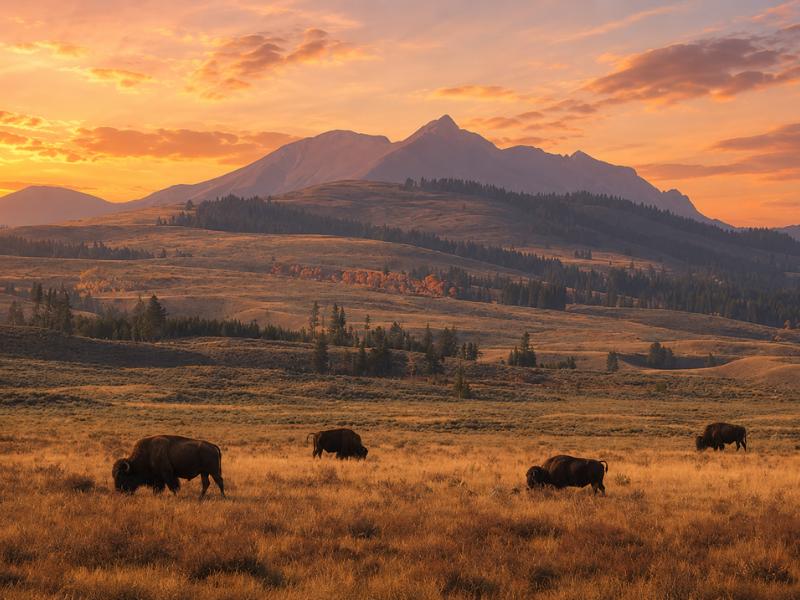
Which multi-day tours start from Bozeman?
Three tours on this site use Bozeman as a departure or arrival point: the Bindlestiff 5-day hotel-based in-depth tour ($2,995, starts Bozeman and ends Jackson), the Insight Vacations 7-day luxury Discovery tour ($6,012, starts Bozeman and ends Jackson), and the Bindlestiff 4-day camping tour that passes near the Bozeman corridor on its way from Salt Lake City. The first two genuinely begin in Bozeman with morning hotel pickups. The camping tour from Salt Lake City enters the park from the south, so it does not pass through Bozeman proper, but we include it here because travellers considering Bozeman often compare all the Bindlestiff options.
The Bindlestiff hotel-based tour departs at 8:00 a.m. from the Best Western Plus in Bozeman. Over five days, it drives south into Yellowstone through the North Entrance at Gardiner, spends three days inside the park, then continues through Grand Teton National Park to finish in Jackson at 6:00 p.m. on Day 5. That one-way Bozeman-to-Jackson routing means you see the entire park from north to south without doubling back, but it also means booking an open-jaw flight: into Bozeman, out of Jackson Hole.
The Insight Vacations Discovery tour follows the same geographic arc on a larger scale. It departs Bozeman and ends in Jackson seven days later, adding the Museum of the Rockies as a dedicated stop, spending more time at each thermal basin, and including the National Museum of Wildlife Art in Jackson. The difference is format: a 40-seat luxury coach with hotel porterage versus a 13-person small-group van. The price reflects that gap, at $6,012 compared to Bindlestiff's $2,995.
| Tour | Operator | Duration | Price | Rating | Start / End | Group size |
|---|---|---|---|---|---|---|
| In-Depth Hotel-Based | Bindlestiff Tours | 5 days | $2,995 | 5.0 (170+ booked) | Bozeman → Jackson | 13 max |
| Discovery Classic | Insight Vacations | 7 days | $6,012 | 5.0 (164+ booked) | Bozeman → Jackson | 40-seat coach |
| Camping Explorer (for comparison) | Bindlestiff Tours | 4 days | $1,050 | 4.9 (429+ booked) | Salt Lake City → Salt Lake City | 14 max |
Why does Bozeman's northern approach matter for what you see?
Entering Yellowstone from the north through Gardiner puts you on the park's oldest and only year-round road, passing through the Roosevelt Arch (the historic 1903 entrance gate), reaching Mammoth Hot Springs within five miles, and placing you in the heart of the Northern Range, which is where the densest winter wildlife concentrations occur. This routing is the reason Bozeman-departing tours tend to cover different ground than Jackson-departing ones.
The Northern Range stretches from Mammoth Hot Springs east through Tower Fall to the Lamar Valley and beyond, covering the lower-elevation grasslands where bison, elk, and wolves spend the winter months. It is the only part of the park where the road stays open all twelve months, which is why Yellowstone winter tours almost always route through Bozeman or Gardiner rather than Jackson. In summer, the Northern Range is less crowded than the Old Faithful corridor because most day-trippers enter from the West Entrance at West Yellowstone, which feeds directly into the geyser basins.
The Bindlestiff hotel-based tour capitalizes on this northern entry by scheduling its wolf tracking day in the Lamar Valley, led by a local expert who monitors pack territories weekly. That stop is only practical from a northern approach because the Lamar Valley sits in the park's far northeast corner, a long detour for any tour entering from the south. The Insight Vacations tour also covers Mammoth and the northern thermal features but spends more of its time on the cultural and geological stops along the way rather than concentrating on predator tracking.
| Feature | Accessible from North (Bozeman/Gardiner) | Accessible from South (Jackson) |
|---|---|---|
| Mammoth Hot Springs | First stop, 5 miles from gate | Requires full Upper Loop drive (~70 miles from South Entrance) |
| Lamar Valley (wolves) | 30-mile drive east from Mammoth | 100+ miles from South Entrance |
| Tower Fall | 18 miles east of Mammoth | 80+ miles from South Entrance |
| Old Faithful | ~50 miles via the Grand Loop | ~30 miles from South Entrance via West Thumb |
| Grand Tetons / Jenny Lake | End of tour, 5+ hours south | Immediate, on the drive north |
What does Bozeman offer before and after the tour?
Bozeman is a genuine university town (Montana State University, ~17,000 students) with a walkable Main Street, a world-class paleontology museum, and a food and brewery scene that outperforms its population of roughly 56,000. Unlike Jackson Hole, which is built around tourism and priced accordingly, Bozeman has a year-round local economy that keeps restaurants and bars at more accessible price points.
The Museum of the Rockies is the standout attraction and the reason it appears on the Insight Vacations luxury tour itinerary. It houses one of the world's largest collections of dinosaur fossils, including a T. rex skull and specimens excavated from the Montana badlands by the museum's own paleontology teams. The Siebel Dinosaur Complex alone is worth 90 minutes. Admission runs about $16 for adults. The museum also hosts a planetarium and rotating exhibits on regional history and Native American culture.
| Activity | Where | Time needed | Cost (approx.) |
|---|---|---|---|
| Museum of the Rockies | 600 W Kagy Blvd, MSU campus | 1.5-2 hours | $16/adult |
| Main Street dining and breweries | Downtown Bozeman, 5 blocks | 1-3 hours | $15-40/meal |
| Palisade Falls hike | Hyalite Canyon, 25 min south | 1 hour round trip | Free |
| Gallatin Valley farmers market | Lindley Park (summer Saturdays) | 1 hour | Free entry |
| Bridger Bowl skiing | 16 miles NE of town | Half or full day | $70-90/lift ticket |
The Bindlestiff hotel-based tour departs at 8:00 a.m., which means you need to arrive in Bozeman the night before. Bozeman Yellowstone International Airport (BZN) is the busiest airport in Montana, with direct flights from Denver, Salt Lake City, Minneapolis, Seattle, Dallas, and several other hubs. It sits 8 miles northwest of downtown, about a 15-minute drive. Peak-season hotel rates in Bozeman run lower than Jackson Hole but higher than Salt Lake City, typically $150-$300 per night in summer for a mid-range hotel.
Travellers who want a car-free Bozeman experience can manage it for the pre-tour portion. Downtown is walkable, Uber and Lyft operate in town, and the airport shuttle services are reliable. You do not need a rental car if you are starting a guided tour, since the operator picks you up at the hotel. If you arrive a day early and want to see Hyalite Canyon or the Gallatin River, a rental car or rideshare is needed for those out-of-town excursions.
How do the two Bozeman-departing tours compare in depth?
The Bindlestiff hotel-based tour and the Insight Vacations Discovery tour follow the same geographic arc from Bozeman to Jackson but target different travellers: the Bindlestiff tour is a 13-person small-group wildlife expedition with a dedicated wolf tracker, while the Insight tour is a 40-seat luxury coach experience with cultural stops, porterage, and a more relaxed pace. Here is where they overlap and where they diverge.
| Dimension | Bindlestiff Hotel-Based (5 days, $2,995) | Insight Vacations Discovery (7 days, $6,012) |
|---|---|---|
| Group size | 13 max | 40-seat luxury coach |
| Accommodation | Hotels, 4 nights | Hotels, 6 nights, with porterage |
| Meals | 4 breakfasts + $100 food kitty for 5 picnic lunches | Not specified in detail (cultural dining experiences included) |
| Wolf tracking | Yes, full day with local expert | Not a dedicated feature |
| Museum of the Rockies | Not on itinerary | Dedicated stop |
| National Museum of Wildlife Art | Not on itinerary | Dedicated stop in Jackson |
| Guide style | Naturalist, wildlife-specialist | Cultural and historical focus |
| Thermal features covered | Norris, Mammoth, Old Faithful, Grand Canyon, West Thumb | Norris, Mammoth, Grand Canyon, Grand Prismatic, Old Faithful |
| Grand Teton coverage | Jenny Lake, Jackson finish | Grand Tetons, Jackson finish |
The price gap between these two tours is $3,017. That buys two extra days, a larger and more comfortable vehicle, hotel porterage (someone carries your bags), and dedicated cultural stops at two museums. It does not buy a meaningfully different amount of time inside Yellowstone itself. The Bindlestiff tour spends three full days in the park; the Insight tour spends roughly four, with more time at each stop. The private vs group Yellowstone tour breakdown examines how group size affects the daily experience in more detail.
Both tours carry a 5.0 rating. The Bindlestiff has 170+ bookings; the Insight Vacations has 164+. These are close enough in volume that neither should be read as more or less "proven" than the other. What the reviews confirm is that both deliver on their promises. The Bindlestiff reviews tend to highlight wildlife sightings and guide knowledge. The Insight reviews tend to highlight comfort, pacing, and the quality of the cultural interpretation. Both are legitimate priorities, and choosing between them is a question of which experience you want, not which one is better.
For travellers who want the Bozeman gateway but at a lower price, the 4-day camping tour from Salt Lake City ($1,050) represents a different tier entirely. It enters the parks from the south, camps inside Yellowstone for three nights, and returns to Salt Lake City. It does not originate in Bozeman, but its operator, Bindlestiff Tours, runs both. The camping tour accepts ages 7+ and covers Old Faithful, Grand Prismatic, Grand Canyon of the Yellowstone, and Jenny Lake across its four days. The family tour packages guide compares it against the other family-friendly options in depth.
When is the best time to take a Bozeman-departing Yellowstone tour?
June through September is the core season for multi-day tours from Bozeman, with July and August offering the warmest weather and the longest daylight but also the heaviest crowds at geyser basins and trailheads. The shoulder months of June and September trade warmer temperatures for thinner crowds and better wildlife viewing, particularly for bears, which are more active in the cooler weeks of early summer and early fall.
| Month | Avg high / low (Yellowstone interior) | Crowd level | Wildlife highlights | Road closures |
|---|---|---|---|---|
| June | 60s / 30s F | Moderate, building | Bears with cubs, elk calving, wildflowers | Some high passes may still be closed early June |
| July | 70s / 40s F | Peak | Bison rutting begins late July, wolf pups visible | All roads open |
| August | 70s / 40s F | Peak | Bison rutting peak, bears fishing for cutthroat trout | All roads open |
| September | 60s / 30s F | Moderate, thinning | Elk bugling, bear hyperphagia (heavy feeding), fall colors | All roads open, some close late September |
Elk bugling season, which runs roughly from mid-September through mid-October, is one of the most distinctive wildlife experiences in the park. Bull elk produce a high-pitched, eerie call that echoes through the valleys, particularly around Mammoth Hot Springs where a resident herd grazes on the lawns between the historic buildings. Because Bozeman-departing tours pass through Mammoth on Day 1, a September departure puts you in the middle of this spectacle almost immediately.
Winter tours from the Bozeman corridor operate on a different model entirely. The North Entrance through Gardiner is the only Yellowstone entrance that stays open to private vehicles year-round, which makes Bozeman the logical winter base. Snowcoach tours, cross-country ski excursions, and wolf-watching trips run from December through March. The winter tours guide covers this season in depth, including what roads close and how transport changes.
Spring (April and May) is the quiet shoulder. Snow is still melting at higher elevations, and some park roads may not open until late May. Wildlife viewing can be excellent because fewer visitors mean less disturbance, but services inside the park are limited and some campgrounds remain closed. For multi-day tours, check the operator's departure schedule: most do not run tours in April, and May departures depend on road openings.
What should you pack for a Bozeman-departing Yellowstone tour?
Bozeman's elevation sits at about 4,800 feet, and tours climb to 7,000-8,000 feet inside Yellowstone, which means the temperature, UV exposure, and air pressure all change meaningfully from the city to the park interior. Packing for a Bozeman departure is packing for two environments: a walkable university town with restaurants and shops, and a high-altitude wilderness where morning temperatures can hover near freezing in every month except July and August.
| Category | Bozeman (town day) | Yellowstone interior (tour days) |
|---|---|---|
| Footwear | Casual shoes for Main Street | Broken-in hiking shoes or boots, waterproof preferred |
| Clothing layers | Light jacket for evening | Base layer, fleece, waterproof shell (mornings can be 30s F) |
| Sun protection | SPF 30+ sunscreen, hat | SPF 50+ sunscreen, brimmed hat, UV sunglasses (7,000-8,000 ft UV) |
| Cash | Credit cards accepted everywhere | $100 for Bindlestiff food kitty, $20-$25 for Grizzly & Wolf Center |
| Camera gear | Phone is fine | Telephoto lens for wildlife, wide-angle for geysers, spare batteries |
| Hydration | Town has water fountains and shops | Refillable water bottle, drink more than usual at altitude |
The food kitty is the cash item that catches travellers off guard. The Bindlestiff 5-day hotel-based tour collects $100 in cash on Day 1 in Bozeman, covering five picnic lunches during the tour. This is not optional and not a tip. ATM access inside Yellowstone is limited to a few lodges, so withdraw the cash in Bozeman before departure. The photography tours guide has additional notes on camera gear for the park's specific conditions, including battery drain at altitude and lens care near geysers.
Bear spray is recommended and sold at outfitter shops in downtown Bozeman for about $40-$55 per canister. You cannot fly with it, so buying it locally before the tour makes sense. Most guides recommend each adult carry a canister on any off-boardwalk hiking. Used or expired canisters can be dropped at recycling stations in the park or at outfitter shops in Jackson at the end of the tour, so you do not need to figure out how to fly home with it.
What are the logistics of flying into Bozeman for a Yellowstone tour?
Bozeman Yellowstone International Airport (BZN) is Montana's busiest airport with direct flights from at least a dozen major hubs, a 15-minute drive from downtown hotels, and meaningfully cheaper fares than Jackson Hole for most origin cities. The airport has grown rapidly in the last decade and now handles over 2 million passengers per year, which means terminal facilities, car rental options, and ground transportation are all at a level you would expect from a mid-size regional airport rather than a small-town strip.
The fare difference between BZN and Jackson Hole Airport (JAC) varies by season and origin, but as a rough benchmark, peak-summer round-trip fares into Bozeman typically run $100-$300 less per person than the same route into Jackson Hole. For a family of four, that translates to $400-$1,200 in potential savings on airfare alone. The Bindlestiff hotel-based tour's Bozeman-to-Jackson routing lets you capture that savings by flying into the cheaper airport and out of the more expensive one, paying the Jackson Hole premium only once.
Ground transportation from BZN to your downtown hotel is straightforward. Hotel shuttles, rideshares, and taxis all operate at the airport. If you are being picked up by Bindlestiff at the Best Western Plus the next morning, you do not need a rental car at all. If you arrive a day early and want to explore Hyalite Canyon, the Gallatin River, or the drive toward Big Sky, a one-day car rental is the practical option.
The Jackson Hole departure guide covers the southern gateway's logistics for comparison. Travellers deciding between the two airports should factor in not just the fare difference but also which part of the park their tour enters first. A Bozeman departure gives you the northern range on Day 1. A Jackson departure gives you the Tetons and the southern thermal basins on Day 1. Both are valid starting points; they just show you different landscapes first. You can explore all Yellowstone tour packages on the homepage to compare every available option.
One note on the open-jaw flight booking: most airline websites and booking engines handle multi-city itineraries without difficulty. Search for "Bozeman to [your city]" as the outbound and "Jackson Hole to [your city]" as the return, or vice versa. It is not a special fare class; it is a standard multi-city search. Some travellers assume open-jaw flights cost more than round trips, but in practice the total is often similar or even cheaper because you are not paying Jackson Hole rates in both directions. The key is to book both legs at the same time so the airline prices them as a single itinerary rather than two one-ways.