Which Yellowstone Experiences Actually Need a Guide?
You can drive Yellowstone's Grand Loop yourself, park at Old Faithful, and watch it erupt without a guide. You do not need anyone's help to see a geyser. But some of the park's best experiences either require or radically improve with a professional who knows where to look, when to go, and what you are actually seeing. Here is where a guide earns their cost and where you are fine on your own.
Choose the trip that fits your gateway, available time and actual party needs.
Booking choice: Spend 6–9 hours searching with binoculars and a spotting scope; deli lunch is included. No Jackson pickup. Winter pickup excludes West Yellowstone and Big Sky. Wheelchair accessibility is listed; confirm your chair and boarding arrangements. Sightings are never guaranteed.
Explore Private Lamar wolf and wildlife safariWe may earn a commission when you book through these links.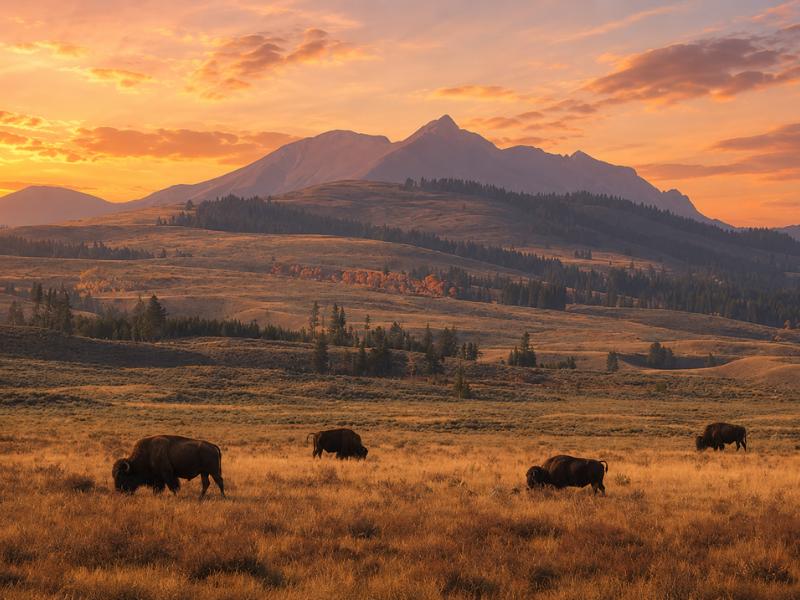
Which experiences genuinely need a guide?
Wolf tracking in Lamar Valley, backcountry hiking in grizzly country, winter snowcoach and snowmobile access, and multi-day itinerary logistics. These are the four categories where a guide is not a luxury but a practical requirement for most visitors.
Wolf tracking: Wolves are visible in Yellowstone, but finding them requires pre-dawn positioning in Lamar Valley, a high-powered spotting scope, and knowledge of current pack territories that changes week to week. The 5-day hotel-based Bindlestiff tour ($2,995) includes a wolf-tracking expert. Without that expertise, you are driving the Lamar road hoping to spot a dark shape on a ridge two miles away. The Yellowstone wolf tours guide covers what makes this different from general wildlife viewing.
Backcountry hiking: Yellowstone's backcountry trails run through active grizzly bear habitat. A guide knows which trails have recent bear activity, carries bear spray, manages group noise and movement, and holds a backcountry permit. Solo backcountry hiking is legal but carries real risk for visitors unfamiliar with bear-encounter protocols.
Winter access: From mid-December through mid-March, most park roads are closed to private vehicles. The only way to reach Old Faithful, Canyon Village or much of the park interior is by snowcoach or guided snowmobile. These are not choices. They are the only transport options available.
Multi-day logistics: Yellowstone's Grand Loop is 142 miles. Timing geyser eruptions, reaching wildlife corridors at dawn, finding campsites or lodging inside the park during peak season, and sequencing stops to avoid backtracking all benefit from a guide who runs the route weekly. This is what a guided tour of Yellowstone actually solves: not access to the sights, but the logistics of seeing them efficiently.
Which experiences are fine without a guide?
Old Faithful and the Upper Geyser Basin, Grand Prismatic Spring from the boardwalk, the Grand Canyon of the Yellowstone overlooks, Mammoth Hot Springs, and most roadside wildlife viewing. These are self-serve experiences with paved access, interpretive signs, and no specialized equipment needed.
The thermal basins are the clearest example. Old Faithful erupts every 60 to 110 minutes (the visitor center posts predicted times). You park, walk to the benches, wait, watch. Grand Prismatic's boardwalk is a flat half-mile loop. Mammoth Hot Springs has a stacked boardwalk with interpretive plaques at every level. None of these require a guide to explain what you are looking at, because the Park Service has already done that with signs, ranger talks, and visitor center exhibits.
Roadside wildlife viewing is similar. Bison, elk and pronghorn are visible from the car in Hayden Valley, Lamar Valley and near Mammoth almost daily in summer. A guide helps you find wolves and grizzlies at distance, but the large, obvious animals, the ones that cause traffic jams, appear without any help.
Guide value: experience by experience
The table below rates each major Yellowstone experience by how much a guide actually changes the outcome.
| Experience | Guide needed? | Why / why not |
|---|---|---|
| Wolf tracking (Lamar Valley) | Yes | Requires dawn positioning, spotting scope, knowledge of current pack locations |
| Grizzly bear viewing | Strongly recommended | Guide knows active feeding areas, manages safe distances, carries bear spray |
| Winter park access | Required | Roads closed to private vehicles; snowcoach or guided snowmobile only |
| Backcountry hiking | Strongly recommended | Active grizzly habitat, permit required, bear-encounter protocols |
| Multi-day itinerary | Recommended | Logistics of timing, sequencing and accommodation in a 2.2M-acre park |
| Photography (golden hour, wildlife) | Recommended | Guide positions you at the right spot before sunrise; you get shots you would miss alone |
| Old Faithful / Upper Geyser Basin | No | Self-serve: predicted eruption times posted, boardwalk access, interpretive signs |
| Grand Prismatic boardwalk | No | Flat boardwalk, no equipment needed, visible without guidance |
| Mammoth Hot Springs | No | Stacked boardwalk with interpretive plaques at every level |
| Grand Canyon overlooks | No | Paved parking, paved paths to Artist Point and Lookout Point |
| Roadside bison/elk viewing | No | Animals are on or near the road; hard to miss in summer |
What does a guide actually do that you cannot?
Three things. First, they know where wildlife is right now, not last month, not last year. Second, they manage logistics you would burn half a day figuring out yourself: geyser timing, road conditions, construction closures, campsite availability. Third, they carry safety equipment and protocols for bear country that most visitors do not have.
The BrushBuck wildlife adventure ($2,198) illustrates this concretely. The naturalist guide provides binoculars and a professional spotting scope, positions the group at Lamar Valley, Hayden Valley and Oxbow Bend at the times when wildlife is most active (typically dawn and dusk), and identifies species that an untrained eye would miss entirely. A dark shape on a hillside two miles away could be a rock, a dead tree, or a grizzly. The guide knows which one it is because they were at that same hillside yesterday.
The five-day hotel-based Bindlestiff tour includes a wolf-tracking session. A specialist contributes local observation knowledge and equipment, but cannot promise a wolf sighting in the first hour. Dedicated single-day wildlife safaris are another option if you do not need a multi-day package.
When does a self-drive trip make more sense?
When your priority is flexibility over efficiency. If you want to stop wherever you want, spend two hours at a single viewpoint, eat lunch on your own schedule, and do not care about maximizing wildlife sightings, self-driving gives you total control of the day.
The trade-off is real. Self-drivers miss roughly 40-60% of the wildlife sightings a guided group gets, because they do not know where to look, arrive at the wrong time, or drive past a distant sighting without recognizing it. They also spend more time on logistics: figuring out which way to drive the loop, when geysers are predicted to erupt, where to park at crowded trailheads, and which campsites or lodges still have availability in peak season.
The Yellowstone tour vs self-drive comparison breaks this decision down in detail. For visitors weighing cost, the is a guided tour worth it post makes the financial case. The short version: a guide's value scales with how much you want to see in how little time. If you have seven days and want to move slowly, self-drive works fine. If you have three days and want to see wolves, geysers and the canyon, a guide pays for itself in efficiency alone.
The bottom line on guides vs going solo
The boardwalks and overlooks do not need a guide. The wildlife tracking, winter access and multi-day logistics do. Most visitors land somewhere in the middle: they can handle the thermal features on their own but would benefit enormously from guided wildlife viewing and itinerary planning. That middle ground is exactly what the multi-day tour packages on this site are built for. You can browse Yellowstone tour packages to see which format matches how much guidance you actually want.