Snowcoach vs Snowmobile in Yellowstone: Which to Book
Winter Yellowstone is a different park. Most roads close to private vehicles from early November through mid-April, and the only motorized ways to reach Old Faithful, the Grand Canyon of the Yellowstone and the interior thermal basins are snowcoach or snowmobile. Both get you there. They feel nothing alike.
Choose the trip that fits your gateway, available time and actual party needs.
Booking choice: Combine an Old Faithful snowcoach day, Grand Teton wildlife and an elk-refuge sleigh ride, with three hotel nights. A four-day package, not a standalone snowcoach ticket. Three breakfasts and optics included; other meals and nonresident entry fees may be extra. Confirm age and vehicle-access arrangements.
Explore Four-day Jackson winter snowcoach tripWe may earn a commission when you book through these links.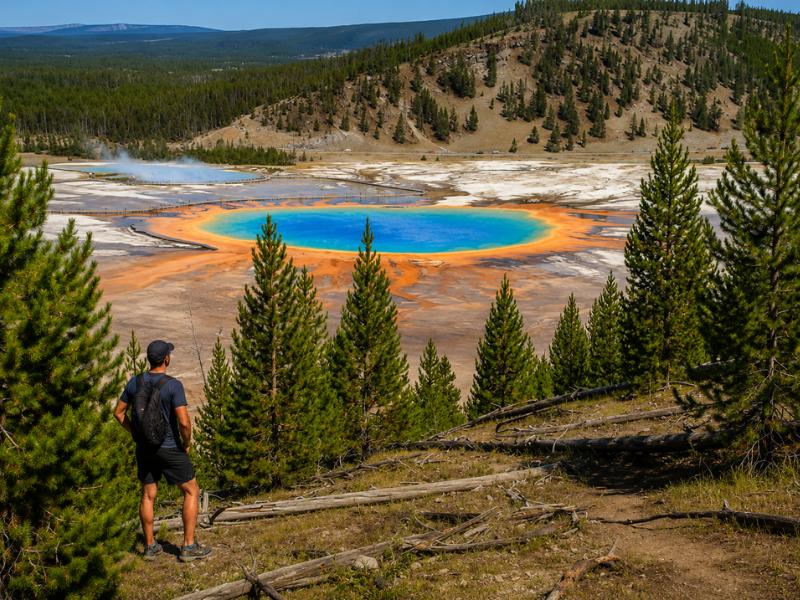
The Core Difference: Enclosed vs. Exposed
A snowcoach is a heated, enclosed vehicle on tracks or oversized tires that carries 8 to 12 passengers with a guide. A snowmobile is an open, single-rider or two-rider machine you operate yourself on groomed trails, following a guide on a lead sled. The snowcoach is a bus with winter hardware. The snowmobile is a motorcycle on snow. Everything else, cost, physical demand, wildlife viewing, noise level, follows from that fundamental split.
| Snowcoach | Snowmobile | |
|---|---|---|
| Capacity | 8-12 passengers, guided | 1-2 riders per machine, guide-led convoy |
| Typical day-trip cost | $175-$350 per person | $250-$450 per person (machine rental + guide) |
| Physical demand | Low. Sit in a heated cabin | Moderate to high. Ride in cold, handle the machine |
| Noise | Quiet inside. Guide narrates the ride | Loud. Helmet required, conversation difficult |
| Wildlife viewing | Better. Quiet approach, windows for scanning | Harder. Noise spooks animals, helmet limits vision |
| Speed / range | Slower, covers fewer miles | Faster, can cover more ground in a day |
| Age / ability | Enclosed cabin; age and access policies vary | 16+ with valid driver's license in most cases |
Snowcoach: The Case For
A snowcoach offers an enclosed, heated cabin and guided commentary between outdoor stops. It can suit travelers who prefer not to operate a snowmobile, but boarding steps, vehicle access, age policies and icy walking surfaces need checking for the actual tour. Neither transport format guarantees wildlife sightings.
Families with children, older travelers, and anyone who has never operated a powersport vehicle should default to a snowcoach. It is also the only realistic option for travelers with mobility limitations, since boarding requires little more than climbing a step. For a deeper look at all snowcoach tours in Yellowstone, the guide covers routes, operators and what to expect.
The main disadvantage is pace. Snowcoaches cover less ground per day than snowmobiles, and the fixed stops mean you cannot pull off the trail to follow a coyote across a meadow. You see what the route and schedule allow, which is plenty for most visitors but can feel limiting for experienced winter travelers who want to push deeper into the park.
Snowmobile: The Case For
Snowmobiling is the more adventurous, more physical, more exhilarating option. You are outside in the cold, operating your own machine across a landscape that feels genuinely wild, and the sense of freedom and speed is real. It is the choice for travelers who want the ride itself to be a highlight, not just the destination at the end.
Snowmobiles also cover more territory in a day. A full-day snowmobile tour can reach the Grand Canyon of the Yellowstone and Old Faithful in the same trip, while a snowcoach on the same route might only reach one. That range matters if you have a single day in winter Yellowstone and want to see as much as possible. For the full range of guided snowmobile trips in Yellowstone, the guide covers everything from half-day loops to multi-day expeditions.
The trade-offs are noise, cold and physical effort. Temperatures regularly drop below zero Fahrenheit in Yellowstone's interior, and riding a snowmobile in those conditions for six to eight hours is genuinely tiring. You will wear multiple layers, heavy gloves and a helmet, and your face will be cold no matter what. Wildlife tends to move away from the engine noise, so close-range sightings are less common than on a snowcoach.
Which Is Better for Wildlife?
Snowcoach, and it is not close. The quiet cabin, the slow pace and the guide's ability to stop and point without shutting down an engine all favor wildlife viewing. Bison in winter Yellowstone often stand on the groomed roads (the packed surface is easier to walk on than deep snow), and a snowcoach can approach them at idle speed without spooking the herd. A snowmobile convoy coming through at speed usually pushes them off the road entirely.
Winter is also prime time for wolf watching in Yellowstone. Wolf packs are more visible against snow, and the Lamar Valley remains partially accessible in winter. A snowcoach's quiet approach and large windows make it a far better platform for scanning distant ridgelines with binoculars than a snowmobile seat. If wolves are a priority for your winter visit, the snowcoach is the obvious format.
Practical Logistics
Commercial snowmobile tours use authorized operators. Yellowstone also has a limited noncommercial snowmobile permit program with training and equipment requirements. Confirm the route, actual departure and cancellation terms before arranging winter lodging.
Entry points matter. West Yellowstone is the most common departure point for both formats, with Mammoth Hot Springs and the north entrance also offering access. Most winter tours of Yellowstone depart from West Yellowstone because it puts you closest to Old Faithful and the Upper Geyser Basin, the two most popular winter destinations.
Which Should You Book?
Book a snowcoach if wildlife, warmth and accessibility matter most. Book a snowmobile if adventure, speed and covering more ground are your priorities.
| You want... | Book this |
|---|---|
| Close wildlife viewing | Snowcoach |
| Adventure and adrenaline | Snowmobile |
| Traveling with children or older adults | Snowcoach |
| Maximum ground covered in one day | Snowmobile |
| Comfortable in extreme cold | Either works |
| Budget-conscious | Snowcoach (typically $75-$100 less per person) |
Winter is one piece of the best time to visit Yellowstone question. The park is spectacularly quiet in winter, thermal features are more dramatic against cold air, and the crowds that define July and August simply do not exist. If you are planning a multi-day trip to the area, the 5-day hotel-based tour ($2,995, 5.0 rating) and the 4-day camping tour from Salt Lake City ($1,050, 4.9 rating) both run during the warmer months and cover the same roads that snowcoaches and snowmobiles travel in winter. You can see our Yellowstone tours on the homepage to compare all formats and seasons.